2/10 Literary Games Group

Hi everyone!

Last week we had an earlier games group session at 9am in the morning, where we discussed the importance of literary genre to our perception of a game’s procedural rhetoric. We talked about the idea that a game’s expectations are set up at the very early stage of genre identification. Expectations being set this early can create opportunities to subvert a player’s expectations, while at the same time that can frustrate players who were expecting a more straightforward experience from their genre fiction. The chapter focused specifically on cowboy and noir detective literary genres, saying that literary expectations about these genres has carried over and been perpetuated by video games. 

We played Electrobasis, a free first-person adventure game about playing as an angel that inhabits electrical equipment to help solve a bunch of people’s problems, in order to reopen a casino. It was a lovely, positive, relaxing game and it comes highly recommended. Thanks to Liam for recommending it! We also started Redtape, a game about rising through the ranks of management in an office building in Hell, which seems very entertaining. We picked the scariest possible name for a demon, “the economy”, striking fear into the hearts of our fellow employees just by uttering our name. 

I’ve attached a reading from the same book for this week. In this chapter, Sara Humphreys discusses how genre is tied to realism, and how realism informs a game’s rhetoric and argument. In some ways, just by presenting a realistic game world, a game can make a player more susceptible to certain arguments, even if just in very subtle or minute ways. We’ll be meeting at the usual time (2pm) this Thursday. Come with some consideration of how your favourite game genre might align with a literary genre, and where the genre’s ideas and codifying moments come from! Not much left of the academic year, so I’ll keep everyone posted about when the group will end for 2025, before I will be running it again next year!

Hope everyone had a nice weekend 🙂

24/7/25 Literary Games Group

Hi everyone,

This week we had a discussion around Bogost’s concept of persuasive games, and his reflection on the term he coined. It’s interesting to see how honest he is about the failings of persuasive games, in that people prefer to talk about the concept rather than play the actual games he developed. We thought that this was because the games were insistent on the moralizing they were engaging in, and were always a bit too up front about what they were trying to persuade. The systems behind the games were both too complex and the message too simple. We played an actual persuasive game that Bogost referenced, Molleindustry’s McDonald’s Game, and observed that phenomenon in action. We thought that the game caricatures McDonald’s and in doing so perhaps trivializes their evil, and makes it all too easy to enact. 

    The idea that video games cannot be persuasive unless they are explicitly made for that purpose is, we agreed, reductionist and hurts the cause of taking video games seriously. A game designer is already on the backfoot if they say that their game is important because it is serious. I suggest expanding the net of persuasive games and procedural rhetoric to include games that are non-serious, as it is in analyzing such games that a lot can be discovered.

We then played some of The Deed: Dynasty, where we must commit a murder and get away with it. While laughing at the strange dialogue was a lot of fun, it’s also worth considering how the game situates violence and murder within the context of other video games. Whereas most games make violence a short, sharp act, The Deed ensures that the player is involved with the planning of the murder at every step, which, even if the game falls short of its aims, at least provokes some reflection.

We also played a bit of an old favourite of mine, NO THING, a corner-turning simulator (or pseudo-rhythm game), set in a dystopic 1990s dreamscape, made up of floating faces and disembodied arms in the midst of a sea of meaningless two dimensional architecture. The way that it delivers its story is bizarre – via imagery and also nigh-incomprehensible lines read by a robot voice – but slowly, the longer you play, the more you piece together. We will likely play some more next week.

I’ve attached the next chapter of the Persuasive Games book, which involves a reflection on the growing gamification of things in general, everyday life. Miguel Sicart questions our need to make things abstract while also gamifying them. How has this affected us, or our perception of games (or life) in general? Do the multifarious reward systems present in gamified day-to-day have a strong impact on us? More than we might be aware of, perhaps? I’d love to hear what people think next Thursday, when we meet again from 2 til 4pm in the Digital Humanities Hub.

Have a great weekend, lovely to see everybody!

Literary Games Group 2025

In 2025 the Literary Games Group will still be running out of the Digital Humanities Hub (1.C.10) on the first floor of the Arts Building on the Dunedin campus at the University of Otago.

This year we will play a variety of games, from adventure games, to horror, to strategy, and to role-playing games – and everything in between, or outside the bounds of genre entirely.

Each session we casually discuss a reading sent out for the week, before getting stuck into playing games. We all have a go and play collaboratively, experiencing games as a group, whether they be new experiences or familiar ones for people. You don’t have to attend every session either, but of course it is more than welcome, especially if we enjoy a game and decide to continue playing it through from week to week!

To be added to the email list, please send an email to the coordinator for the group, Marina Cone, at marina.cone@otago.ac.nz.

We will be starting in semester one in a few weeks.

Hope to see you there 🙂

Literary Games Group 3/9/24

Hi everyone,

It has been a frenetic few weeks for me, with a lot going on. I have been trying to take the mid-semester break as a bit of a rest period before we get back into the final half of semester 2, 2024. How did that happen?

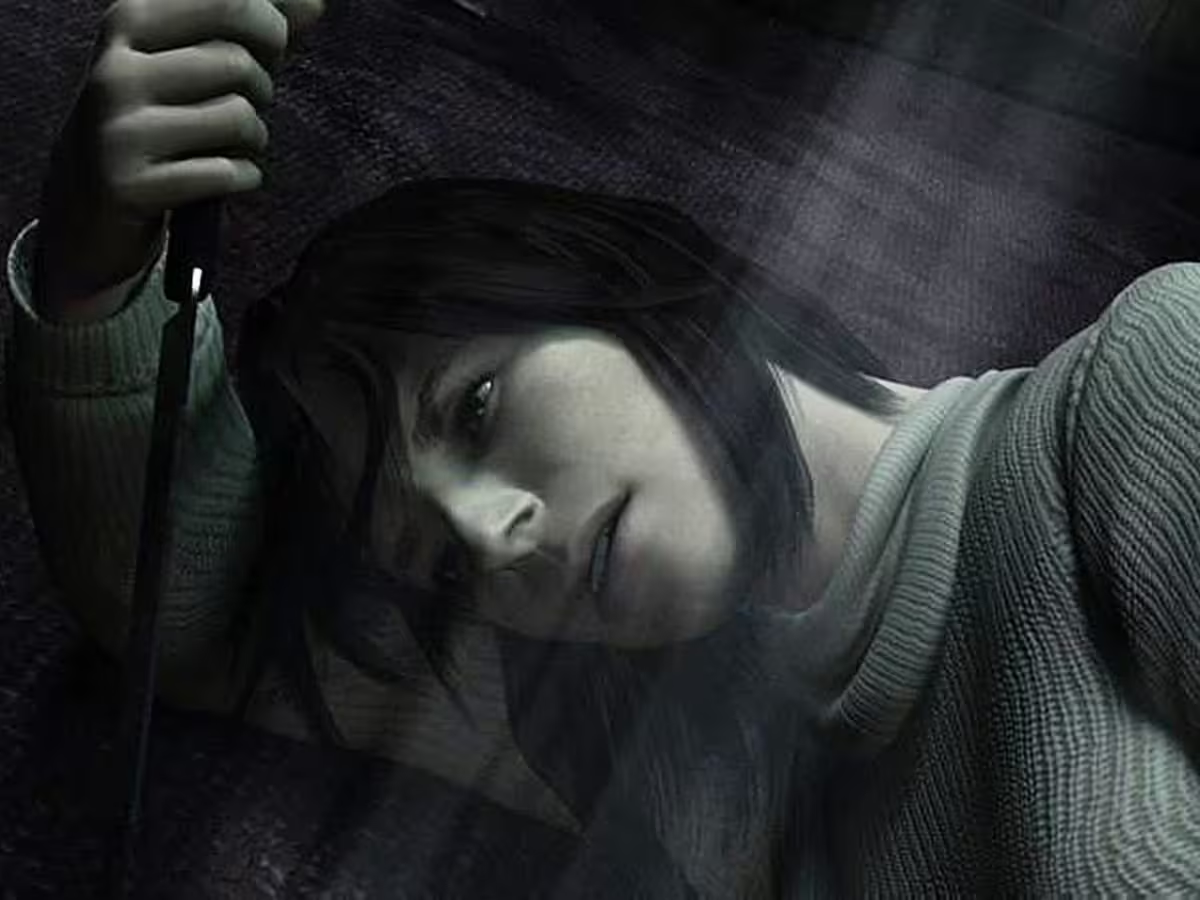
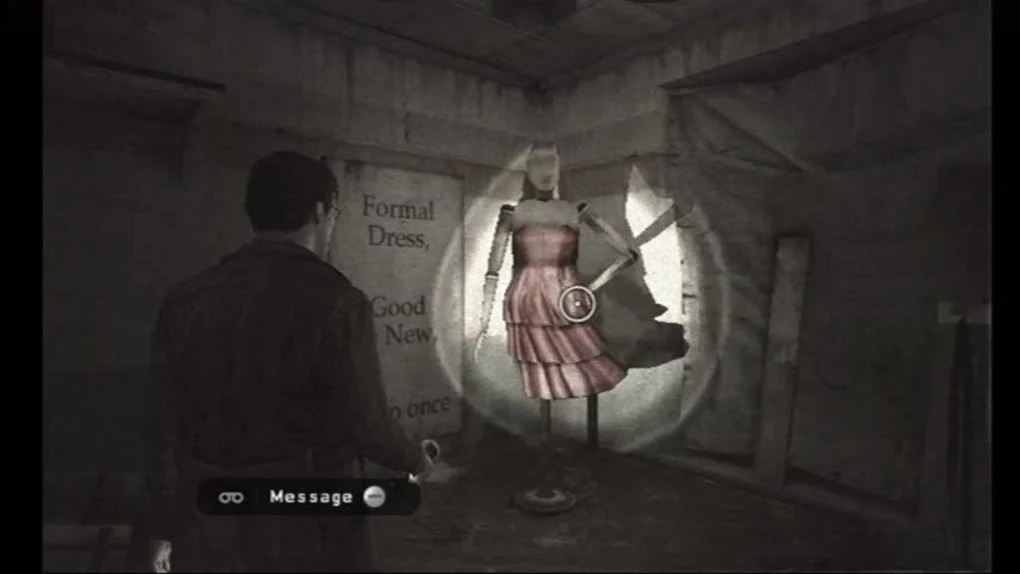
The last couple of weeks we have been playing through Silent Hill 2, a game which holds a lot of significance for me. Alongside games like Pathologic and The Void, Silent Hill 2 was one of the games that first opened my eyes to the possibilities that video games had as an art form and as a medium for storytelling. It is always a joy to watch people play it through for the first time, so thank you to everyone for indulging my own biases. I hope that it engenders the same feeling of appreciation in those of us in the group, who are playing it in a group setting rather than alone.

What interests me most is Silent Hill 2‘s use of space, and how it unfolds in very special ways. It is worth considering how film grain impacts our interpretation of events as well – some hate it when it comes to video games, but grain can be a part of a visual style so much so that we consider it to add a sense of history and reality. Finally, how do we imagine games outside of actually playing them? We can create our own imagined game worlds, and they can become incredibly personal. That is how I find myself experiencing many game spaces given the time I spend in them for both relaxation and research purposes.

For this week, I’ve selected a reading on video games and space – specifically, video games and tourism. This is a topic that (evidently) always fascinates me and holds my attention. I have been using tourism as a lens in relation to how I discuss ruins recently in my thesis. I hope you find some enjoyment from this week’s reading, the introductory chapter from Tom Van Nuenen’s book “Traveling through Video Games“.

Please let me know if you have any questions or suggestions for the remainder of the semester. If there is anything you would like to discuss or read about, I would be more than happy to oblige. I was even thinking of having a longer session to cap the year off and perhaps celebrate with food afterwards. Let me know if you would be open to that. It’s been a long and very busy year, and would love to commemorate getting through it somehow with a resurrected Literary Games Group!

All the best everyone, have a good relaxing rest of your mid-sem break and a cruisy start to the second half of semester 2!

Literary Games Group 12/3/24

It was great to see people again today! We discussed Nguyen’s chapter on games and agency. The idea that games are tools that inscribe agency is a fascinating one. We are goal-oriented when we play games, and it is interesting to consider our capacity to pick up a game, play it with a goal in mind, and then immediately drop said goal when we stop playing the game. We also brought up morality and moral judgements, imposed on us by the developer. The moral frameworks of each game are something that are worth thinking about, as we must examine how the rules of the game intersect with the fiction.

We started the 2009 horror/thriller Silent Hill: Shattered Memories this week, and plan to continue playing through it next week. The game is particularly relevant to the question of developer-enforced moral judgments, as the game invisibly judges the player on a number of similarly-invisible metrics. The psychological profile it creates might not be accurate, but it is very interesting. As is the question: do we play the game as ourselves, or do we play as the main character, Harry, searching for his missing daughter? When we play a game like this – what is the goal? The goal of a more ambiguous game may differ from player to player, which is what makes playing games like this communally such an enlightening experience.

This coming week, we’ll be reading the introduction of Astrid Ensslin’s “Literary Gaming”, as way back when (in 2021!) it was the first complete reading we did for the group. The name of the group was derived from the book, and the book still acts as a kind of mission statement, defining what exactly a literary game is. I felt it worth including this week as it still works well as a definition.

Looking forward to seeing everyone next week!

[Literary Games Group] 28/7/21 – Outer Wilds

Hi everyone,

This week we had a look at the second chapter of Matthew Spokes’ examination of “Gaming and the Virtual Sublime”, which contained a history of the sublime and ways we could attempt to define it, as well as a few examples of the feeling of the sublime in video games, such as the moment in The Elder Scrolls V: Skyrim where you look down from the top of the Throat of the World, the largest mountain in the game, and see the town you visited just a few hours prior as a bunch of tiny pixels on your screen. That discussion also inspired me to return to Morrowind, which I must do at some point…

Next week we’ll be reading the third chapter of the book, entitled “The Contemporary Sublime”.

We also started the long-awaited “The Outer Wilds“, which is already proving to be a perfect match for the book we are reading. The rolling, endless vistas of space, the fantastic architectural flourishes, and the thrill of discovery and engagement in a video game that is both intelligent and fun should prove to be a continually engaging experience throughout the semester.

Hope everyone has a great week, looking forward to seeing people next week!

[Literary Games Group] 21/7/21 – Definitions and Cycles

Hi again everyone,

This week we looked at the first chapter of “Gaming and the Virtual Sublime: Rhetoric, Awe, Fear, and Death in Contemporary Video Games”, by Matthew Spokes, in which Spokes grapples with broader questions regarding the inherent nature of video games as a definable entity. He examined them from a few different perspectives, but there was a section that was plucked out as being particularly relevant to our group. Spokes says:”research on the impact of games, in terms of their power to offer new ‘possibility spaces’ (Salen & Zimmerman, 2004), socio-political engagement and critical tools for understanding a changing world will begin to show the affective resonance of this form of popular culture, and how far removed it has become from simplistic notions of passively consumed entertainment.”

In the simplest words, games can be (and are) more than just reskinned formulas.

Our reading for next week is Chapter 2 of Spokes’ book, “The Classical Sublime”.

On top of that, we started the semester with Silent Hill 4: The Room’s best level, which showcases the spectacular monster, level and puzzle design of Team Silent at work, the “Water Prison World”. This world works by constructing a layered panopticon with a circular design, meaning that at no moment are you safe or unexposed to danger, and there is always a blind spot around each corner, which means that eerie monsters can ambush you at any time. On top of this, the game is narratively and symbolically engrossing, using any number of fantastically clever tricks to rope you in.

You can purchase the game for yourself here.

Next week we should begin our playthrough of “The Outer Wilds”.

Hope to see you all next week!

[Literary Games Group] 14/7/21 – Start of Semester 2

Hi again everyone for another semester,

This week we set up the literary games group for another semester, for meetings from 12 – 2pm every Wednesday.

We have decided to start the semester with a reading of the book “Gaming and the Virtual Sublime: Rhetoric, Awe, Fear, and Death in Contemporary Video Games”, by Matthew Spokes. The first chapter of this book, entitled “What Are Games For?”, is the reading for this week.

Our basic decision for the games we will play this semester is that we will use “The Outer Wilds” as our long-term project, but we also want to have a slot every session open to play a slice of a game, or just finish a shorter experience. I have also created a document that allows us to sort of see what’s coming up on the horizon and allows us to sort of “schedule in” what games we’d like to play next. It can also be a way to chart games that you might like to come in and see played and discussed. The document can be accessed here.

I have set up the first “game slice” to play, a bit of the classic survival horror game “Silent Hill 4: The Room“, which (mostly) works with the controller!

Hope everyone has a great week ahead, looking forward to reconvening and playing some cool games next week!

[Literary Games Group] 18/5/21 – Dreams of Reality

Hi everyone,

Today we brought The Dream Machine to a close, finishing the sixth and final chapter of the game. It proved to be a truly compelling ending, that, while not bringing a definite conclusion into sight, allows the player to define the final meaning of what you see. In my opinion, the ending merely proves the game’s prowess as both a psychological horror and a well-designed point and click adventure game. It forays into things that I don’t imagine many other games or developers would ever touch, and it’s a thought-provoking marvel, in my eyes. I’ll have to let it sit for a while, but it might be one of my favourite games I’ve ever played.

We also discussed chapter 3 of Galloway’s “Essays on Algorithmic Culture”, “Social Realism”. We discussed games like September 12th, Toywar, and America’s Army in relation to how a player experiences them and then takes bits of the game away in real life, i.e. startling statistics regarding how players who’ve played a lot of skill-based first-person shooters has higher accuracy than trained police officers. We also discussed the level of agency that a player has in a game, and whether or not a diegetic character has more agency than the player (which I disagreed with).

Next week’s reading is chapter four from Galloway, “Allegories of Control”.

Hope to see everyone next week,

Marina

[Literary Games Group] 12/5/21 – From The First Person

Hello everyone,
Another good meeting this week. We discussed the origin of first-person shooters, and how they didn’t necessarily have to have a violent bent to them. We also looked at immersion, and how it can be maintained, broken, or subverted, and looked at how The Dream Machine does this almost imperceptibly when you are sucked into a dream. We also examined the origins of the first-person angle come from film, but how games can build upon it in a better way than film can ever hope to achieve. Games create a sense of place and being when they use the first-person camera, and this can even be considered “confronting” – a stressful, limiting way to experience a game. FPS games often pit the player against hordes of deadly enemies, so these sorts of situations (to a person who doesn’t game as much) can be confronting and feels like an interesting problem to solve. How do you introduce a new player to these kinds of games? Is the ever-popular FPS genre a place to introduce those who haven’t gamed before to gaming?

We are tantalizingly close to finishing The Dream Machine. However, we encountered a game-breaking bug that prevented us from continuing. I messaged the developers, and within the span of about three or four hours, they had fixed the bug, so hopefully next session will be the final session required to cap off The Dream Machine and unravel its final mysteries before we begin to take it apart a bit more.

Next week’s reading is another of Galloway’s “Essays on Algorithmic Culture”, this one entitled “Social Realism”. As always we meet every Tuesday at 1pm in the Digital Humanities Hub.

Hope to see everyone next week!